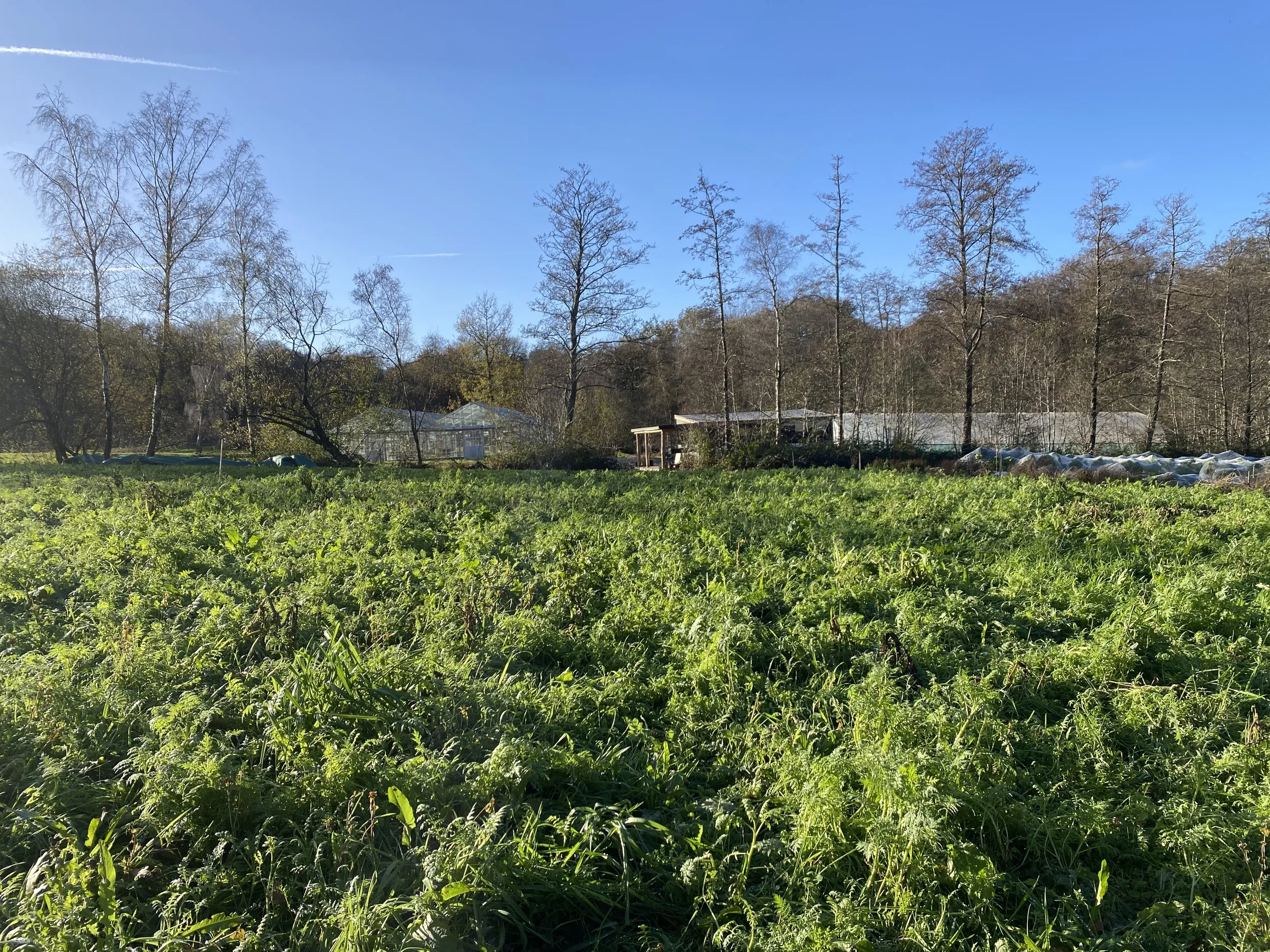
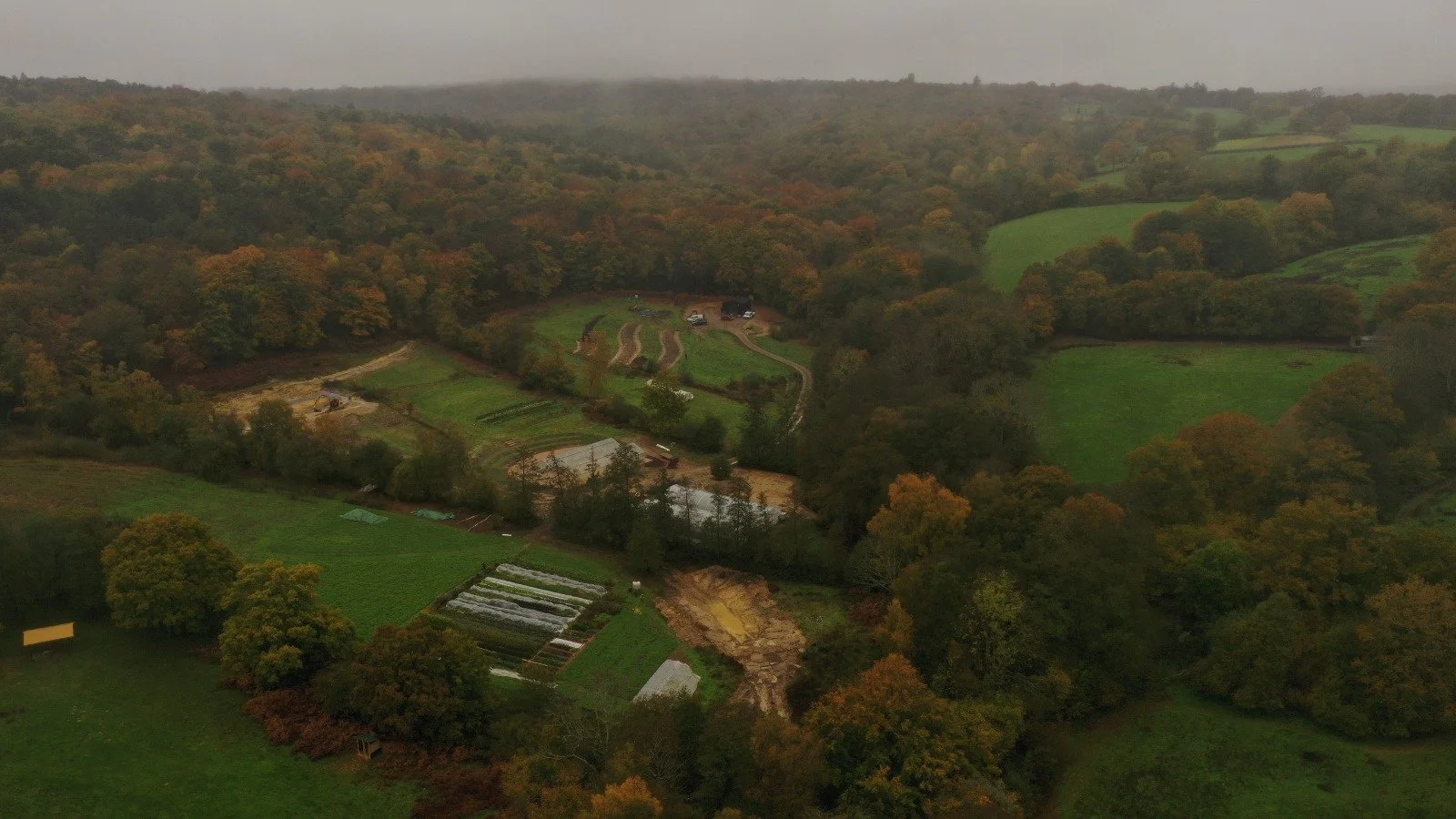
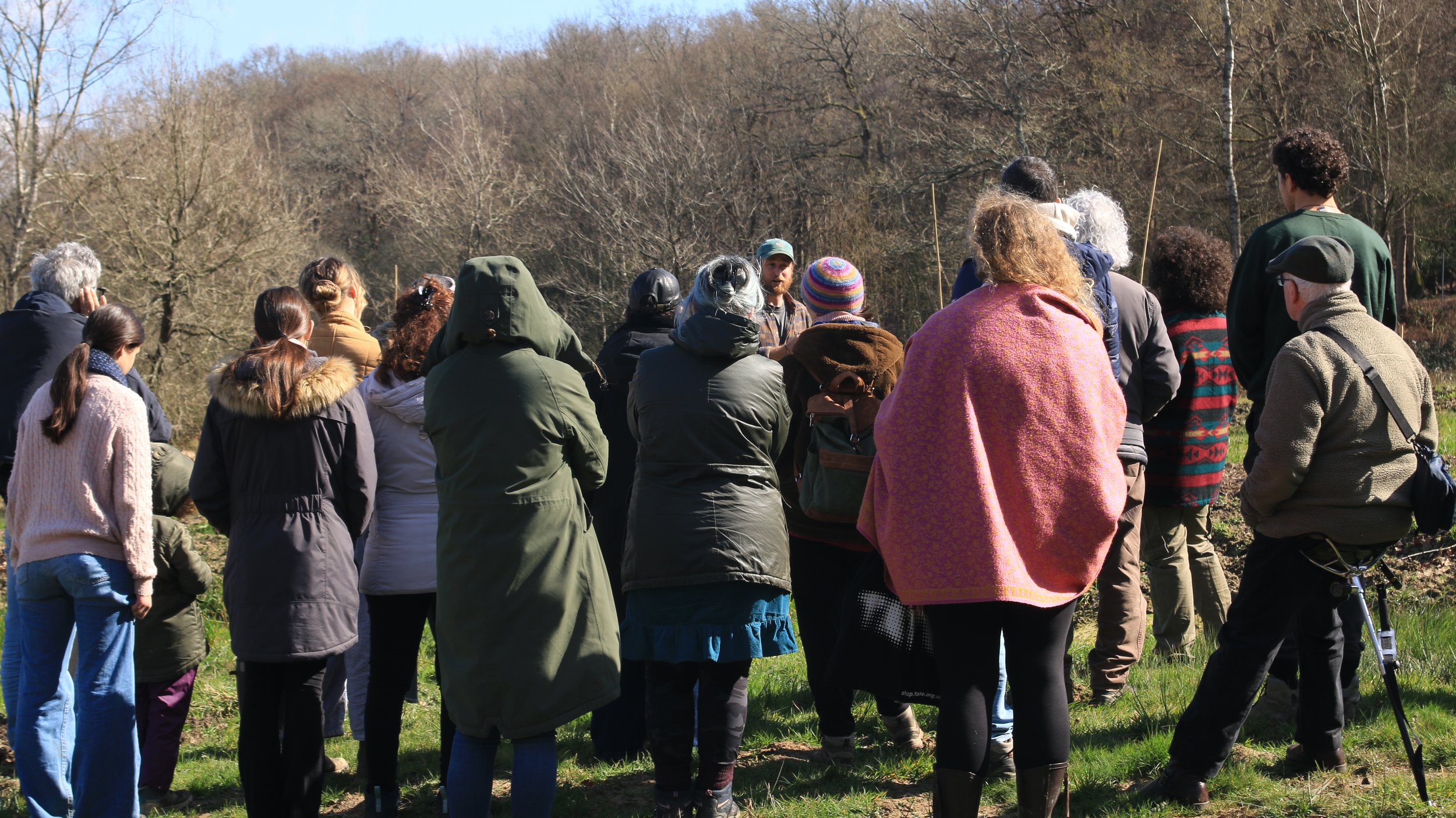
Farmacy sits within a clearing in the ancient Ashdown Forest — three wet fields at the end of a forest track, with no mains water, limited power, and a surrounding SSSI landscape that demanded every decision be made with ecological care. When I arrived, it was marginal ground by most assessments. What I saw was a wetland waiting to be worked with.
Over a year of full on-site embeddedness, I led the design and project management of the farm's transformation — coordinating contractors, managing budgets and sequencing, and overseeing every stage of implementation from infrastructure to planting.
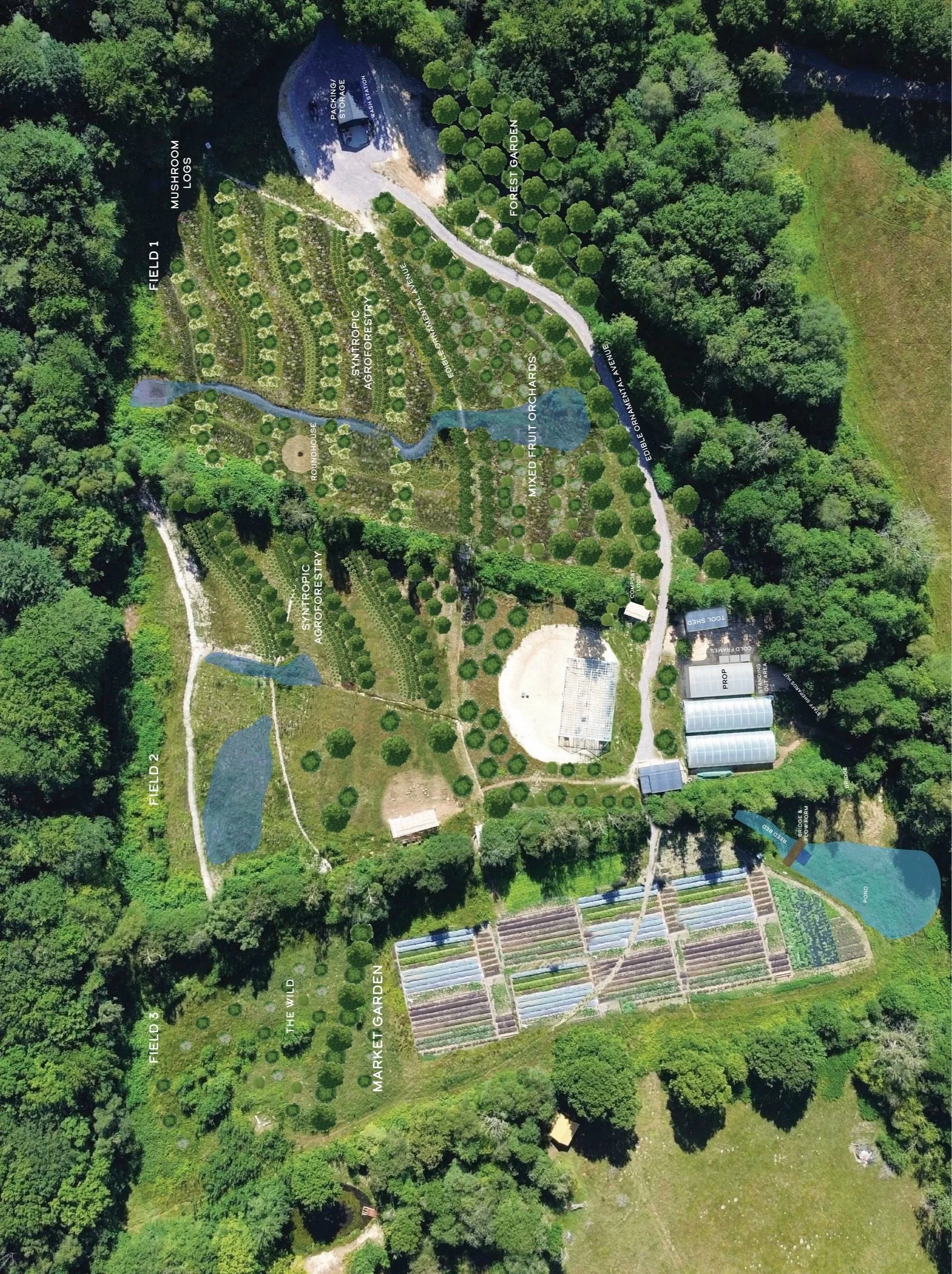
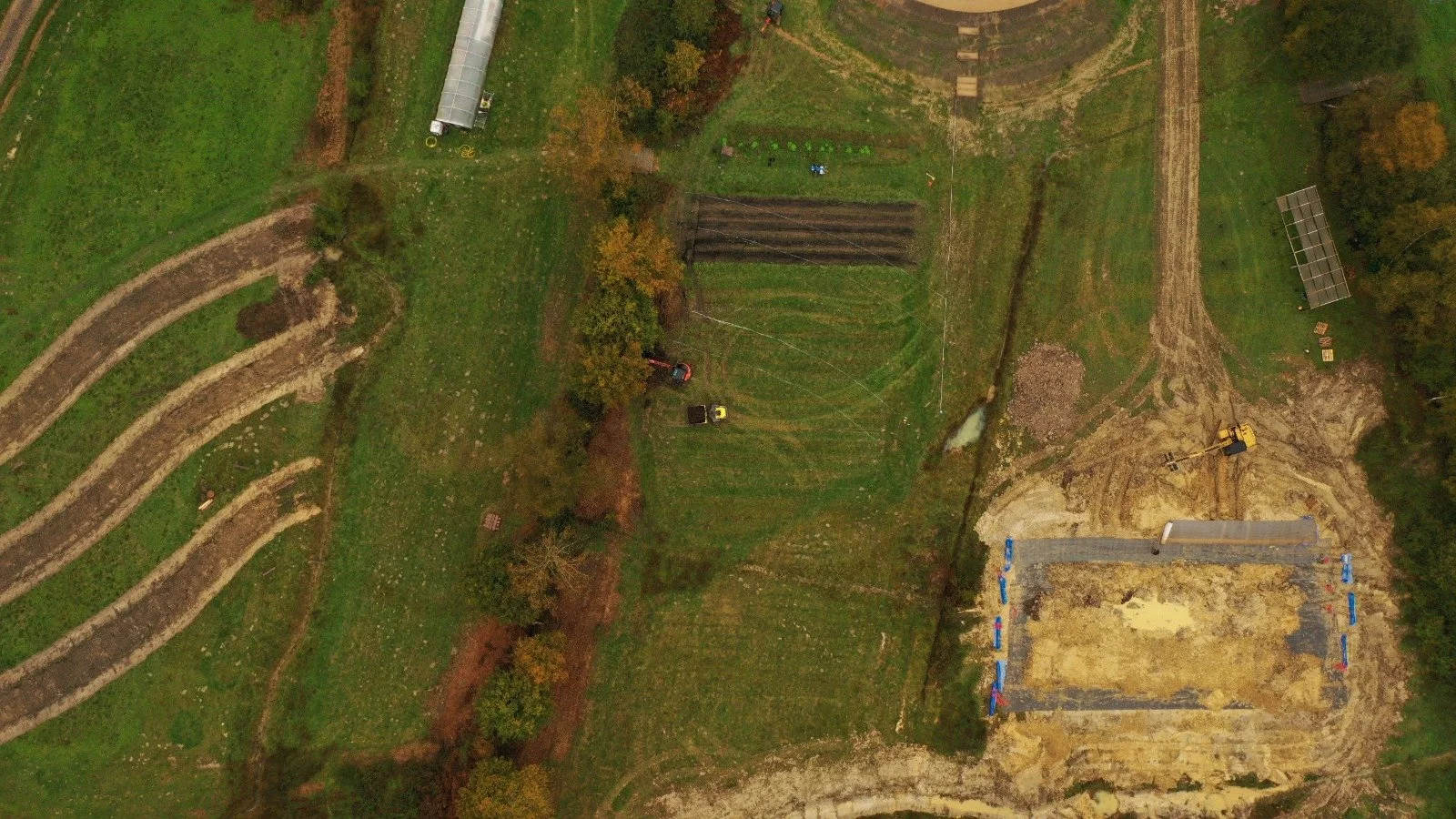
The water was the central design challenge and the central design opportunity. The site had no mains supply — so we installed a borehole, treating high iron and manganese levels to make it viable. Surface runoff from the surrounding woodland is now captured through a two-pond system, ecologically purified through planting and flow forms, and distributed via irrigation across the site. Rather than draining the wetland, swales were designed to move water intelligently — directing it toward areas developed as richer wetland habitat, and away from productive growing zones.
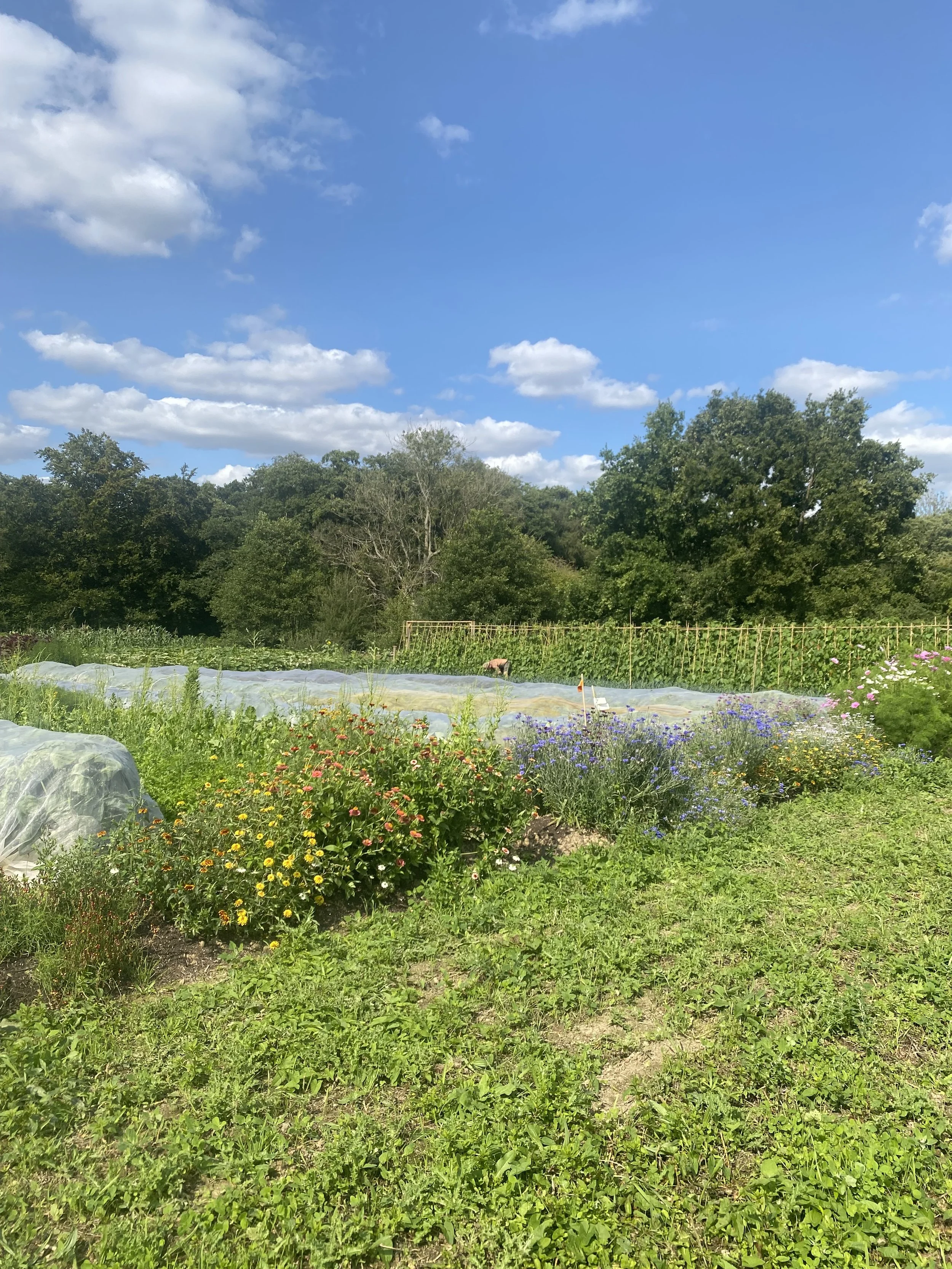
Soil testing revealed what the waterlogged history had left behind — depleted, mineralogically poor ground across all growing areas. A fully balanced mineral input programme was designed and implemented using ecological inputs, lifting both the floor and ceiling of soil fertility across the site and creating the conditions for genuinely productive growing.
On and alongside those swale systems, a series of syntropic growing systems were established — top fruit, stone fruit, soft fruit, mushrooms, perennial vegetables, and dense biomass plantings, integrated with wildflower and green manure belts for pest and disease management. What was waterlogged grassland became a productive, ecologically layered landscape.
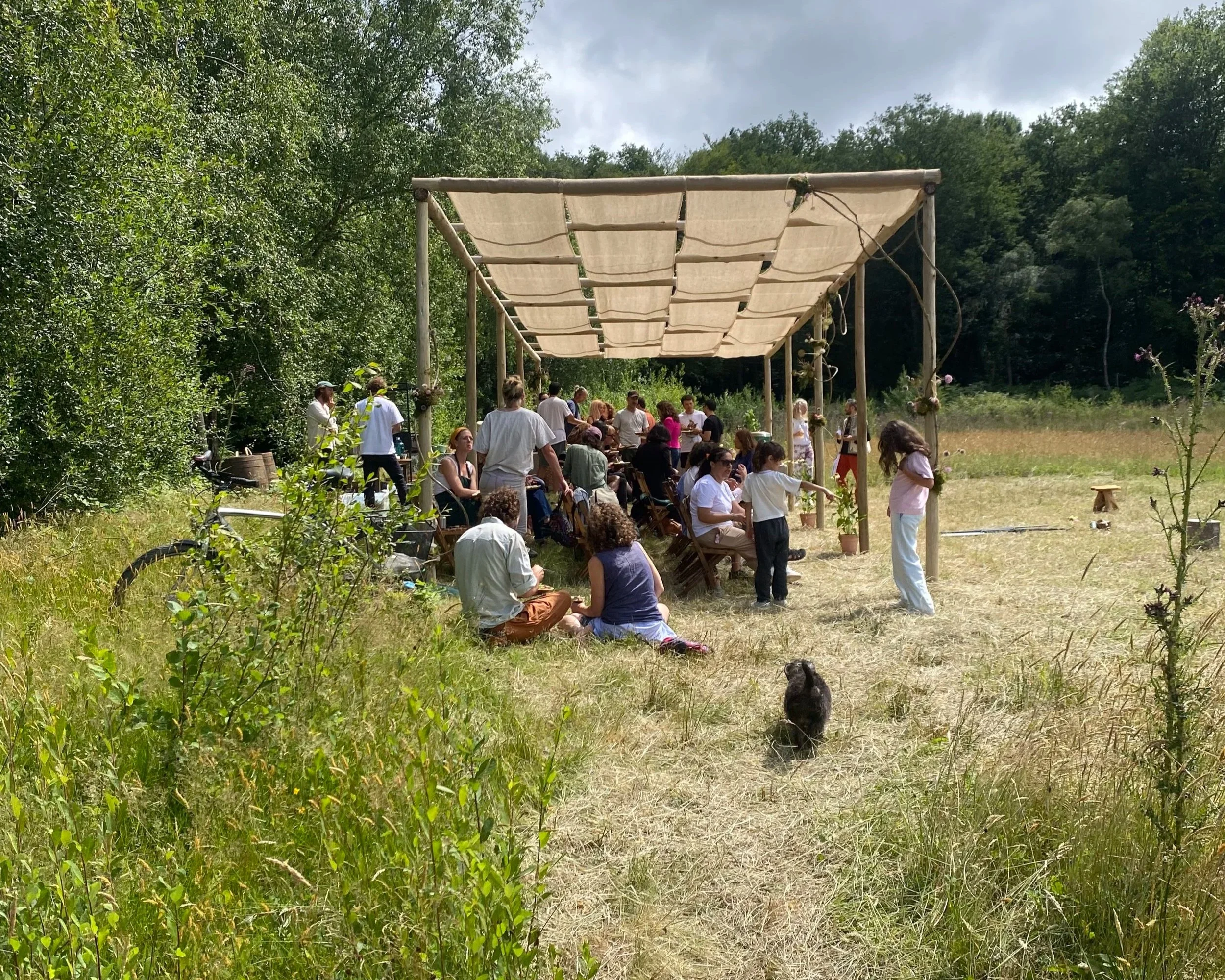
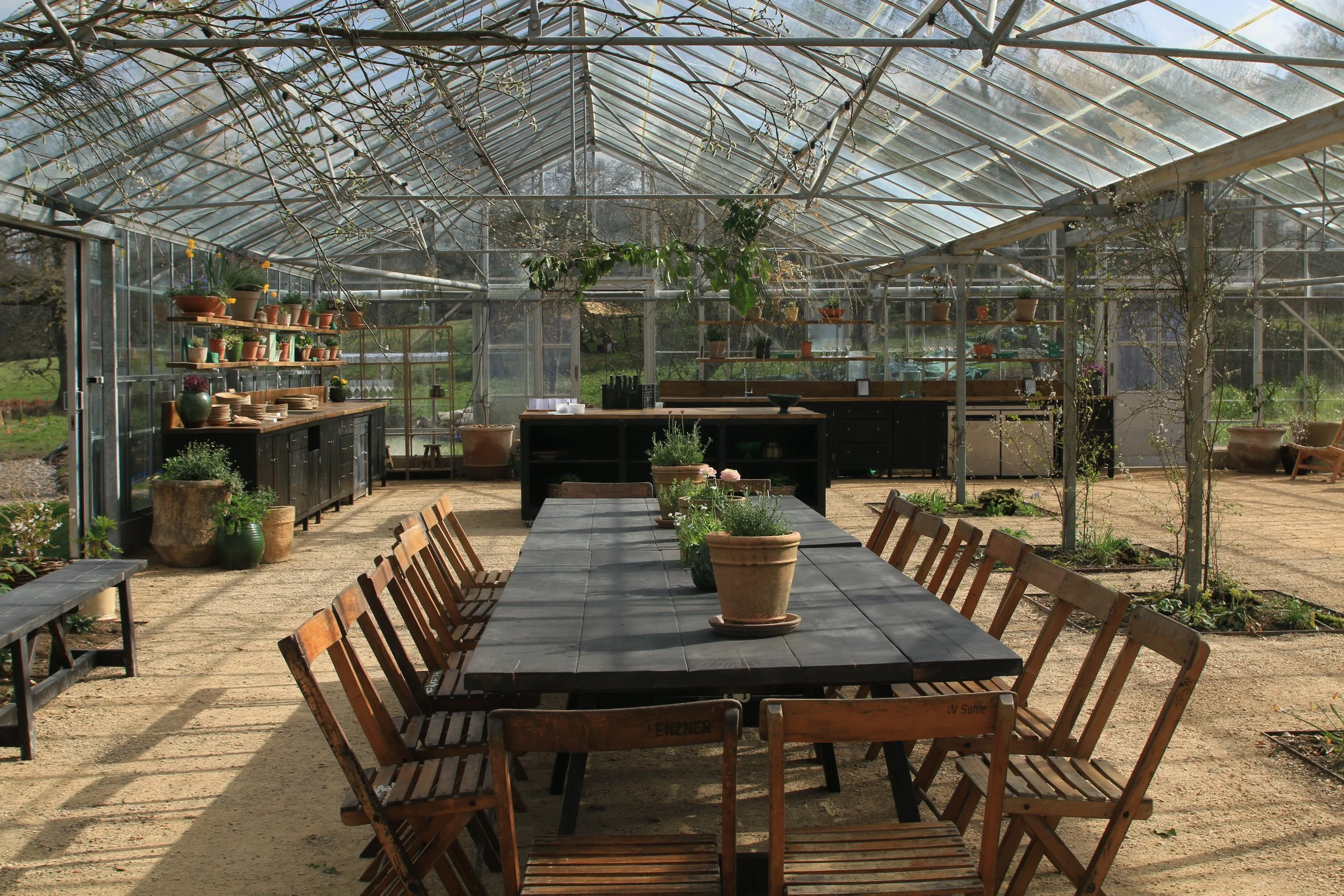
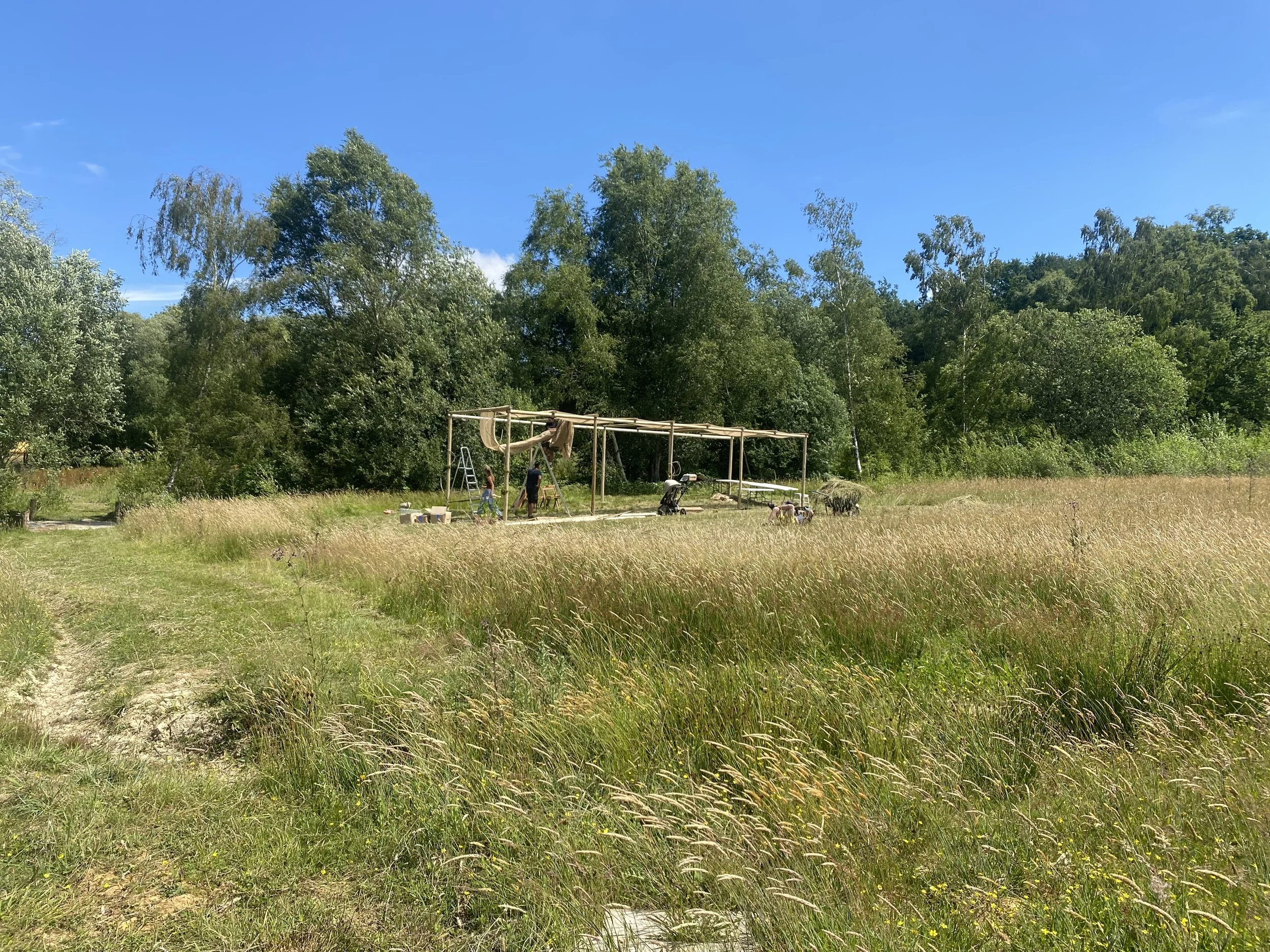
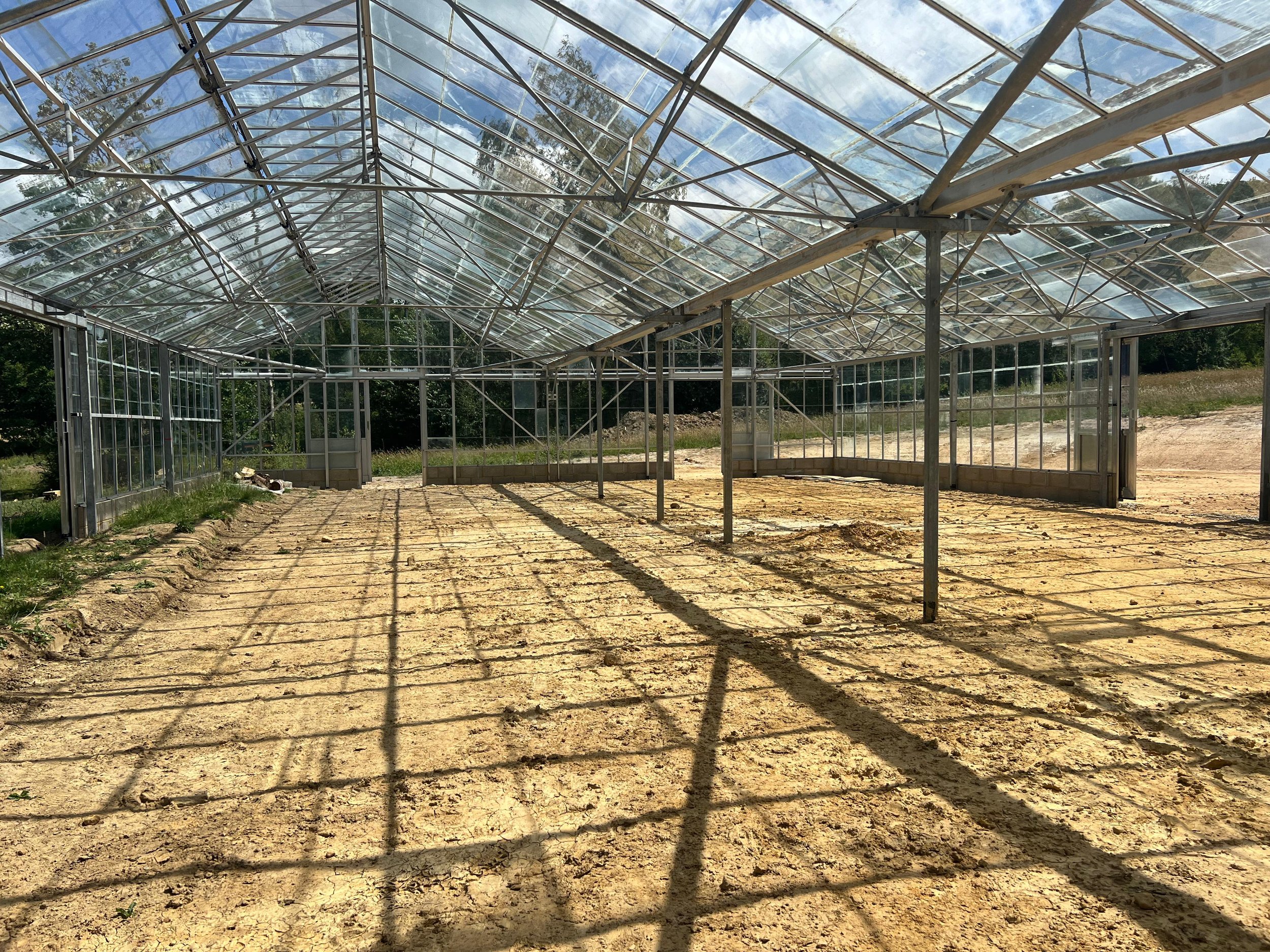
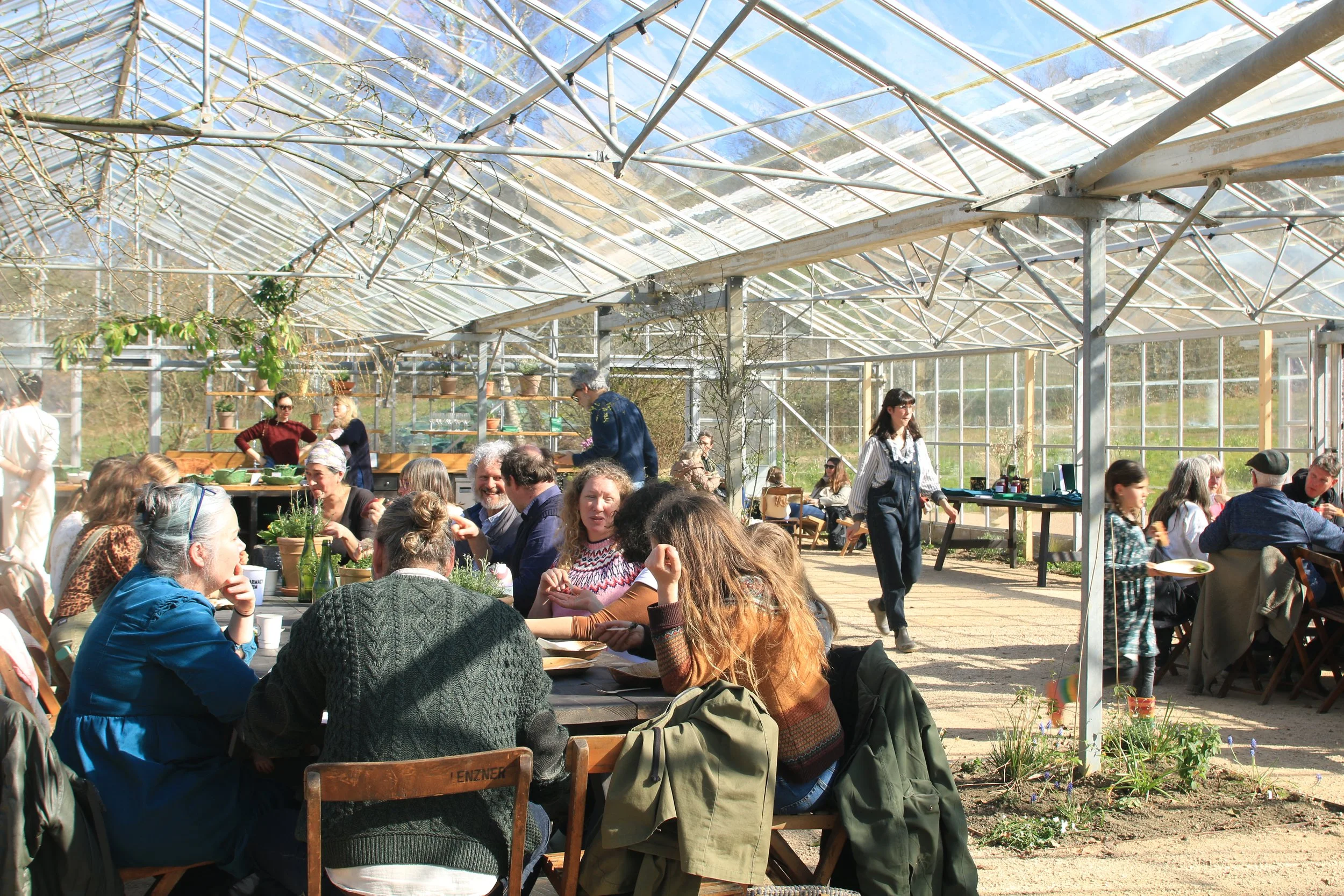
The site's character — forest edge, semi-wetland margins, diverse grassland — was preserved and enhanced rather than erased. Hedgerows were diversified with productive species including sea buckthorn. A parkland system was developed around the hospitality areas. A glasshouse and amphitheatre were built and fully planted — inside and out — to create a hosting space that feels genuinely rooted in the landscape. A working farm became a destination, despite being accessible only down a forest track.
Infrastructure from scratch: borehole installation and water treatment, power upgrades and site-wide distribution, polytunnel installation, access and hardstanding works, and the coordination of every contractor and supplier involved.
The result is a farm that works with one of the most constrained and ecologically sensitive sites I have encountered — and is more productive, more beautiful, and more ecologically alive for it.